

1. Anterior Segment Fellowship Programme
24-Month Fellowship in Anterior Segment, Ophthalmology
INTRODUCTION
The Anterior Segment Fellowship offers comprehensive advanced training in the diagnosis and medical and surgical management of a broad range of anterior segment disorders, with a particular focus on cataract and cataract surgery. The programme also provides fellows with opportunities to undertake clinical and applied research, fostering strong research skills and encouraging meaningful contributions to the field of ophthalmology.
A key component of the fellowship is advanced Dry and Wet Lab training, incorporating structured, Simulation-Based Practice in Manual Small Incision Cataract Surgery (MSICS) and Phacoemulsification. This hands-on training provides a safe and controlled environment for fellows to develop, practice, and refine essential surgical skills before progressing to live surgery under the direct supervision of an experienced Anterior Segment Consultant.
CORE TRAINING & SURGICAL EXPOSURE
Clinical & Diagnostic Skills
- Comprehensive anterior segment evaluation and clinical decision-making
- Slit-lamp, gonioscopy, tonometry and ophthalmoscopy
- A-scan/B-scan, OCT, automated refraction/keratometry
- Optical biometry/IOL Master, specular microscopy
- Tear-film and microbiological investigations
Surgical Training
- MSICS: simulation-based training, dry and wetlab followed by supervised and independent surgery
- Phacoemulsification: structured wet lab training followed by supervised and independent surgery
- DCR/DCT, entropion and ectropion repair
- Primary corneal, conjunctival and scleral repair for open-globe injuries
- Introduction to trabeculectomy and combined procedures
Laser Training
- YAG Capsulotomy
Research and Academics
- Complete a research project and prepare at least one manuscript for publication (Optional)
- Weekly fellow presentations: journal review / curriculum-based teaching
- Weekly mentor-led discussion of surgical challenges and clinical cases
- Opportunities to participate in teaching and community eye-care programmes
FELLOWSHIP EXPERIENCE
OPD | Simulation Based AI Lab | Operation Theatre | Ward Rounds | Surgical Camps | Research | Academic Teaching
Fellows will participate in cataract screening and surgical camps in remote areas of Nepal after achieving competency in cataract surgery.
ELIGIBILITY CRITERIA:
Candidates must hold an MD/MS in Ophthalmology recognized by Nepal Medical Council.
DURATION: 24 Month
Application Process:
Applicants are requested to apply through Sagarmatha Choudhary Eye Hospital and Biratnagar Eye Hospital www.leecs.org with the relevant document. Selected candidates will receive information within two weeks of submission of the application. Upon Successful payment of the course fee, admission letter will be sent.
For International Candidates:
International applicants must obtain a Temporary Registration Certificate from the Nepal Medical Council (NMC). The registration process is coordinated through the organization and may take time. Placement and scheduling will be confirmed only after NMC registration approval
For more Information/enquiries, contact
Sagarmatha Choudhary Eye Hospital
033-563080
Biratnagar Eye Hospital
021-437361
beh@erec-p.org
2. Sandwich Fellowship in Anterior Segment
Introduction:
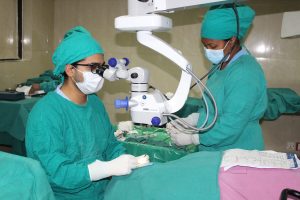
There is a growing need for more ophthalmology subspecialists. However, traditional fellowship programs that provide sufficient hands-on surgical training are not accessible to all interested ophthalmologists. Many ophthalmologists are unable to pursue traditional fellowship training due to professional and personal commitments that limit their ability to relocate for extended periods. In response to this need, we have developed the Sandwich fellowship program in collaboration with experienced subspecialists in which the trainee receives training both in person and remotely. This ‘Sandwich Fellowship’ consists of in-person rotations (at the ‘Mentor’ institution) alternating with remote rotations (at the ‘Parent’ institution), both of which provide on-going mentorship and training and which result in surgical competence.
Rotation Schedule:
|
Rotation |
1 (Months 1-2) |
2 (Months 3-6) |
3 (Months 7-9) |
4 (Months 10-12) |
|
Training Location |
Parent Hospital |
Mentor Hospital |
Parent Hospital |
Mentor Hospital |
Objectives:
By the end of the fellowship, the participants will be able to:
Clinical –
- Conduct complete ophthalmic evaluations
- Diagnose common anterior and posterior segment conditions
- Perform a slit lamp examination with detailed fundus evaluation.
- Diagnose and develop a management plan for all types of cataracts (excluding pediatric) including those anticipated to be complex.
- Perform biometry and IOL selection and provide patient counselling.
- Diagnose posterior capsular opacification and develop a management plan.
Surgical
- Competently perform uncomplicated SICS and phacoemulsification cataract surgery on adults.
- Competently perform YAG capsulotomy.
- Identify and manage the common complications of cataract surgery, including posterior capsular rupture, zonular dialysis, and premature entries.
- Explain the concept and use of capsular tension rings.
Eligibility Criteria:
- Qualified with MD/ MS/DO/ DNB degree from recognized
- Preference will be given to candidates with prior surgical exposure.
Duration: 1Year
Minimum numbers during the fellowship:
- SICS: 100 cases
- Phacoemulsification: 50 cases
- YAG capsulotomy: 25 procedures
Course fees:
For Nepali & Indian candidates: NPR 500000
For International Candidates: $ 4000
Mode of payment: Candidates are required to make payment online upon receipt of the official invoice and admission confirmation letter
Accommodation: National candidates are responsible for arranging their own accommodation. For international candidates, accommodation will be arranged within the hospital campus or at a nearby hotel, subject to availability. Meals will be provided at the hospital canteen and charged on an actual consumption basis
Application Process:
Applicants are requested to apply through Biratnagar Eye Hospital www.leecs.org with the relevant document. Selected candidates will receive information from Biratnagar Eye Hospital within two weeks of submission of the application. Upon Successful payment of the course fee, admission letter will be sent.
For International Candidates:
International applicants must obtain a Temporary Registration Certificate from the Nepal Medical Council (NMC). The registration process is coordinated through the organization and may take time . Placement and scheduling will be confirmed only after NMC registration approval.
For more Information/enquiries, contact
Course Coordinator
Biratnagar Eye Hospital, Biratnagar
Phone No: +977-9768684560
Email: dth.coordinator@erec-p.org