

Retina Fellowship
Sandwich Fellowship in Vitreo-Retina
Introduction The growing demand for ophthalmology subspecialists highlights a critical gap in accessible, high-quality fellowship training. The increasing demand for ophthalmology subspecialists highlights a significant gap in accessible, high-quality fellowship training. Although conventional fellowship programs provide comprehensive training, they are often not feasible for many ophthalmologists. In response to this need, we have developed an innovative Sandwich Fellowship Program in collaboration with experienced subspecialists. This program is designed to provide a balanced and flexible approach to subspecialty training.
The Sandwich Fellowship integrates in-person clinical and surgical rotations with structured remote learning, allowing participants to gain hands-on experience while continuing their professional and personal commitments. Through alternating onsite and remote training phases, fellows receive continuous mentorship, guided learning, and skill development throughout the program. This approach ensures that high-quality subspecialty training becomes more accessible, practical, and adaptable—without compromising on clinical excellence.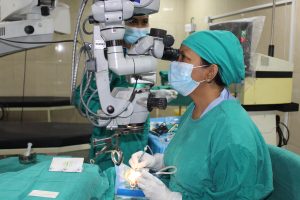
Objectives:
By the end of the Vitreo-Retina Fellowship, the participant will be able to:
1.Obtain relevant patient history, evaluate patients with vitreoretinal disorders, and perform comprehensive clinical examination, including fundus assessment using direct ophthalmoscopy, slit lamp biomicroscopy, and indirect ophthalmoscopy with indentation where indicated.
2.Competently perform and interpret macular Optical Coherence Tomography (OCT), Fundus Autofluorescence (FAF), Fundus Fluorescein Angiography (FFA), and B-scan ultrasonography, correlating imaging findings with clinical examination to establish an accurate diagnosis.
3.Diagnose a wide range of vitreoretinal diseases and formulate appropriate management plans based on sound clinical judgment and evidence-based practice.
4.Provide standard-of-care management for patients in the post-operative period.
5.Competently perform retinal laser procedures, including focal, sectoral, panretinal photocoagulation, and sub-threshold micropulse laser, and effectively manage associated complications
6.Competently perform pre-operative assessment and counselling for patients undergoing Scleral Fixated Intraocular Lens (SFIOL), Pars Plana Vitrectomy (PPV), and scleral buckling procedures.
7.Competently perform surgical procedures including Scleral Fixated Intraocular Lens (SFIOL) implantation, Pars Plana Vitrectomy (PPV), and scleral buckling.
8.Competently perform surgical management of dropped IOL/nucleus removal, tractional retinal detachment (TRD), uncomplicated rhegmatogenous retinal detachment (RRD), macular procedures (MP, ILMP), and endophthalmitis.
|
Rotation (Month range) |
1 (Months 1-2) |
2 (Months 3-5) |
3 (Months 6-8) |
4 (Months 9-12) |
5 (Months 13-15) |
6 (Months 16-18) |
|
Training location |
Parent hospital |
Mentor Hospital |
Parent Hospital |
Mentor Hospital |
Parent Hospital |
Mentor Hospital |
Optional Extension Rotation for six months
7th Rotation: Parent Institution – 3 months
8th Rotation: Mentor Institution – 3 months
Eligibility Criteria:
MBBS, DO/DOMS, MS/MD DNB or other ophthalmic Degree
Proficient in cataract surgery with a strong academic background.
Preference will be given to candidates with access to a vitreoretinal mentor at their parent institution
Course Fee
For Nepali & Indian candidates: NPR. 800000
For International Candidates: $5500
Mode of Payment:
Candidates are required to make payment online upon receipt of the official invoice and admission confirmation letter.
Accommodation:
National candidates are responsible for arranging their own accommodation. For international candidates, accommodation will be arranged within the hospital campus or at a nearby hotel, subject to availability. Meals will be provided at the hospital canteen and charged on an actual consumption basis
Application Process:
Applicants are requested to apply through Biratnagar Eye Hospital www.leecs.org with the ophthalmology degree. Selected candidates will receive information from Biratnagar Eye Hospital within two weeks of submission of the application. Upon Successful payment of the course fee, admission letter will be sent
For International Candidates:
International applicants must obtain a Temporary Registration Certificate from the Nepal Medical Council (NMC). The registration process is coordinated through the organization and may take time. Placement and scheduling will be confirmed only after NMC registration approval.
For more Information/enquiries, contact
Course Coordinator
Biratnagar Eye Hopsital, Biratnagar
Phone No.: +977-9768684560
Email: dth.coordinator@erec-p.org
Medical Retina Fellowship
Introduction:
This fellowship is designed to develop competent clinicians capable of independently evaluating and managing a wide spectrum of vitreoretinal diseases. The program emphasizes a structured, hands-on learning approach to strengthen both foundational and advanced knowledge in medical retina. Participants will gain focused training in clinical examination, diagnostic interpretation, and evidence based medical management of retinal disorders. The training will provide practical exposure to retinal laser procedures and intravitreal injections, ensuring comprehensive skill development in modern vitreoretinal.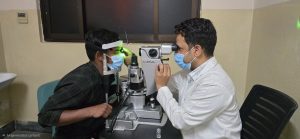
Objectives:
By the end of the fellowship, the participant will be able to:
1.Elicit relevant clinical history and perform comprehensive evaluation of patients presenting with vitreoretinal diseases, including detailed ocular examination using direct ophthalmoscopy, slit-lamp biomicroscopy, and indirect ophthalmoscopy with or without scleral indentation.
2.Perform and interpret macular Optical Coherence Tomography (OCT), Fundus Autofluorescence (FAF), Fundus Fluorescein Angiography (FFA), and B-scan ultrasonography, and correlate imaging findings with clinical examination to establish accurate diagnoses.
3.Accurately diagnose a wide spectrum of vitreoretinal diseases and make informed clinical decisions grounded in sound ophthalmic knowledge and evidence-based practice.
4.Demonstrate understanding of indications, perform retinal laser procedures—including focal, sectoral, panretinal photocoagulation, and sub-threshold micropulse laser—and effectively manage associated complications.
5.Competent in administering various types of intravitreal injections in accordance with established clinical protocols and safety standards.
Eligibility Criteria:
MBBS, DO/DOMS, MS/MD DNB or other ophthalmic Degree
Duration: Three Month
Course Fee: For Nepali & Indian candidates: NPR. 2,50,000
For International Candidates: $3000
Mode of Payment:
Candidates are required to make payment online upon receipt of the official invoice and admission confirmation letter.
Accommodation: National candidates are responsible for arranging their own accommodation. For international candidates, accommodation will be arranged within the hospital campus or at a nearby hotel, subject to availability. Meals will be provided at the hospital canteen and charged on an actual consumption basis
Application Process:
Applicants are requested to apply through Biratnagar Eye Hospital www.leecs.org with the ophthalmology degree. Selected candidates will receive information from Biratnagar Eye Hospital within two weeks of submission of the application. Upon Successful payment of the course fee, admission letter will be sent
For International Candidates:
International applicants must obtain a Temporary Registration Certificate from the Nepal Medical Council (NMC). The registration process is coordinated through the organization and may take time. Placement and scheduling will be confirmed only after NMC registration approval.
For more Information/enquiries, contact
Course Coordinator
Biratnagar Eye Hospital, Biratnagar
Phone No: +977-9768684560
Email: dth.coordinator@erec-p.org
VITREO RETINAL FELLOWSHIP
Introduction
The long-term fellowship in Vitreo-Retina at Sagarmatha Choudhary Eye Hospital and Biratnagar Eye Hospital is designed to develop competency in the evaluation and management of vitreoretinal diseases. The training encompasses focused efforts to develop basic and clinical knowledge, clinical skills, diagnostic and medical and surgical management of vitreoretinal diseases.
The program offers comprehensive exposure to diagnostic techniques including indirect ophthalmoscopy, slit-lamp fundus biomicroscopy, fluorescein angiography, indocyanine green (ICG) angiography, retinal autofluorescence, optical coherence tomography (Stratus and Cirrus OCT), and B-scan ultrasonography.
Fellows gain experience in a broad range of retinal and vitreous disorders. Beginning as surgical assistants, fellows progressively assume greater responsibility as their skills develop, along with involvement in postoperative patient care, operative documentation, hospital and discharge summaries, and academic teaching activities.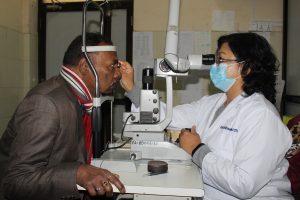
Objectives:
After completion of course participants will:
- Evaluate patients with vitreoretinal diseases through relevant history taking.
- Diagnose vitreoretinal diseases and make appropriate clinical decisions.
- Perform surgical skills to manage vitreo-retinal cases.
- Identify candidates for vitreoretinal surgery and provide pre- and post-operative care.
- Perform retinal laser procedures and manage associated complications.
- Conduct scientific research and publication.
- Participate in teaching learning activities.
Eligibilty criteria:
Candidates must hold an MD/MS in Ophthalmology recognized by the Nepal Medical Council (NMC) and be competent in performing cataract surgery.
Duration: 18 Months
Application Process:
Applicants are requested to apply through Sagarmatha Choudhary Eye Hospital and Biratnagar Eye Hospital www.leecs.org with the relevant document. Selected candidates will receive information from Biratnagar Eye Hospital within two weeks of submission of the application. Upon Successful payment of the course fee, admission letter will be sent.
For International Candidates:
International applicants must obtain a Temporary Registration Certificate from the Nepal Medical Council (NMC). The registration process is coordinated through the organization and may take time. Placement and scheduling will be confirmed only after NMC registration approval
For more Information/enquiries, contact
Sagarmatha Choudhary Eye Hospital
033-563080
Biratnagar Eye Hospital
021-437361